The long arc of becoming
Do you sense a gap between the world we are capable of imagining—one of genuine care, of justice, of humans living in right relationship with one another, with the countless species we share this planet with, and with the living systems that sustain all life—and the world we actually inhabit?

We feel it when we witness suffering we cannot stop. When we see that our institutions, for all their noble language, so often fail to meet the depth of the problems they were designed to address.
When we notice that knowledge alone—even vast amounts of it—does not seem to reliably produce wisdom. It is tempting to turn away from this gap, or to collapse into despair about it.
But there is another possibility.
What if the gap is not a sign that something has gone catastrophically wrong, but a faithful reflection of where we are in our development as a species?
What if the most honest and fruitful thing we can do is look clearly at what that development actually requires?
This question has occupied philosophers, psychologists, contemplative traditions and scientists in different ways, yet it feels more relevant than ever. The more closely we look, the more it seems the answers we need are not primarily political or technological—they are developmental.
Many thinkers have contributed to our understanding of human development, each illuminating different dimensions of the journey. Trauma researchers such as Gabor Maté, Bessel van der Kolk and Peter Levine have revealed how profoundly experience shapes the body and nervous system. Dan Siegel's work in interpersonal neurobiology has offered a deeply integrative understanding of awareness and psychological integration.
Among contemporary frameworks, however, Ken Wilber's Integral Metatheory has provided perhaps the most comprehensive attempt to bring different streams of thought together. It is this broader developmental map that forms the basis of the exploration that follows.

The interior has not kept pace
Across the span of human history, our outer complexity has grown at a pace our inner development has not matched.
We have built systems of extraordinary sophistication—technologies, institutions, legal frameworks, and global networks. We have accumulated knowledge at a scale no previous generation could have imagined.
And yet the consciousness operating these systems—the inner life, the relational intelligence, the capacity for genuine empathy, and long-range ethical reasoning—has, in significant ways, remained behind.
This is not because humans are fundamentally flawed, but because inner development is not automatic. It does not happen simply by accumulating more information, acquiring new beliefs, or building more complex outer structures.
It requires something qualitatively different:
A genuine transformation in human consciousness itself.
But what does genuine transformation of consciousness actually mean? Most of us, when we hear that phrase, think of spiritual awakening—a shift in the experience of awareness itself. And that is part of it. But it is not the whole picture.
Ken Wilber's Integral Metatheory maps this territory with particular clarity, drawing on developmental psychology, contemplative traditions, systems thinking, and a vast range of cross-cultural research. It does not simply ask whether we become more knowledgeable or more spiritual. It asks how human beings themselves develop across multiple dimensions throughout life.
At the heart of his framework is a distinction that is easy to miss but changes everything: the difference between structures of consciousness—the stages of psychological development—and states of consciousness. In other words, between growing up and waking up.
These are two distinct axes of human growth, and confusing them is one of the most common errors in both spiritual and psychological enquiry.
Stages of psychological development
Stages of psychological development are the structural milestones through which human consciousness grows across a lifetime—and across history.
They represent what Wilber calls our centre of gravity: the lens through which we habitually interpret reality, make meaning, and decide what matters. Each stage not only changes what we think about the world; it also changes what we are capable of perceiving, including and participating in.
Unlike states, stages cannot be skipped, and they do not come and go. They are permanent building blocks which must be grown into, sequentially, over time. And unlike states, which we can directly experience and report on, stages are largely invisible to us. They are the lens through which we see—not the things we see. Like the grammatical rules we use fluently without ever having consciously learned them, stages silently organise how we make meaning, what we take to be real, and what remains beyond our current reach. They become visible only when pointed out—and even then, only to the degree that we have grown beyond them.
Each stage transcends the limitations of the one before it while retaining its gifts—a movement Wilber calls transcend and include. Just as molecules include atoms within a more complex organisation, each stage of psychological development transcends and includes the stages that came before, as we’ll see next.
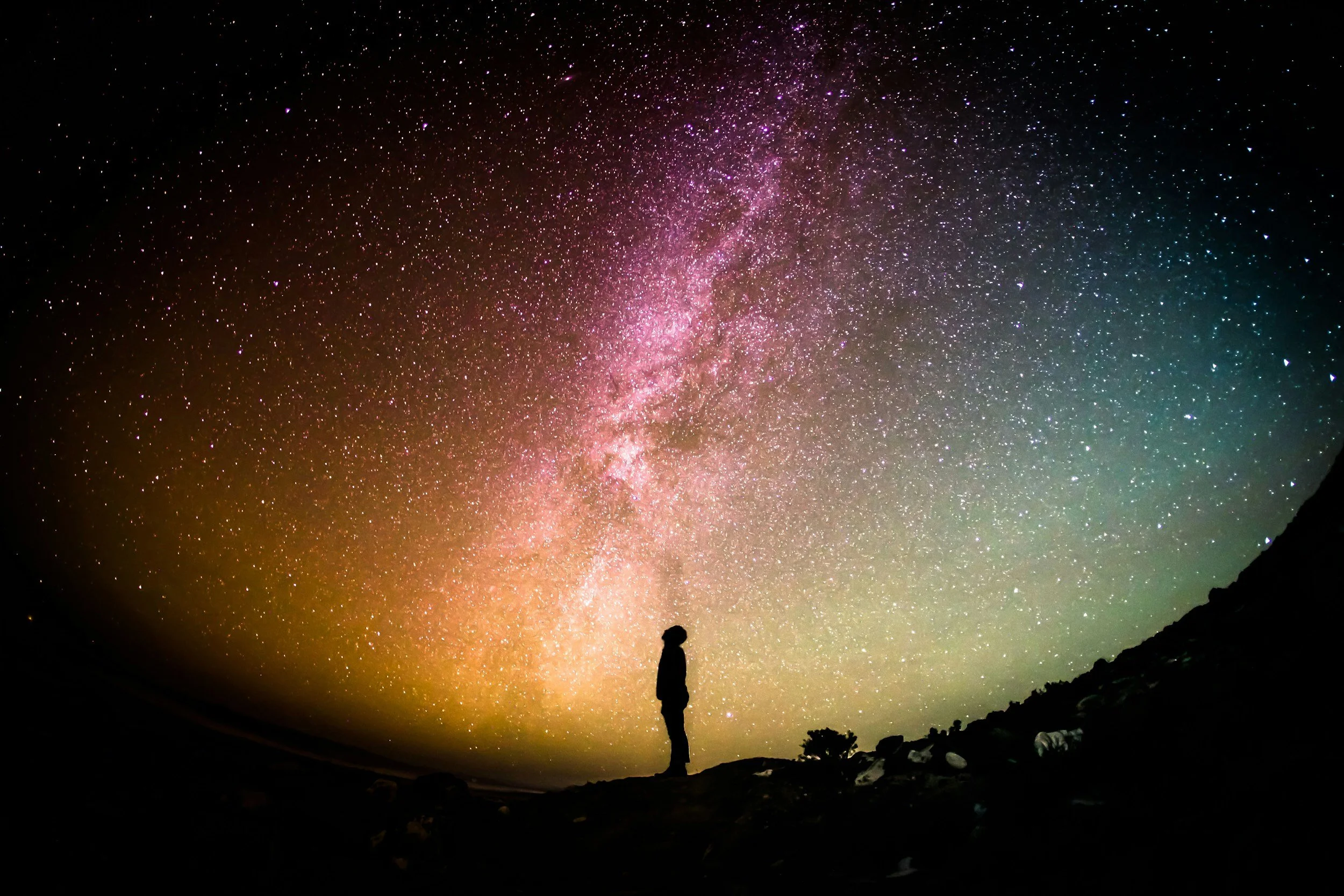
From egocentric to Kosmocentric
Developmental psychology has mapped the broad arc through which human consciousness matures, from the undifferentiated awareness of infancy to the most expansive forms of adult development currently known.
The early stages of development are the necessary foundation of every human life. The problem arises when the psychological structures that were once appropriate in early life continue to organise an adult’s or a culture’s relationship to the world long after the conditions that shaped them have passed.
Wilber maps this developmental arc through a sequence of evolutionary movements:
Pre-egocentric stage: The undifferentiated consciousness of the newborn, before a stable self has even formed. The world and the self are not yet distinct.
Egocentric: The self is the centre of the world. Concern is organised almost entirely around self-preservation, survival needs, and what lies outside the self is experienced as either a resource or a threat. Thinking is impulsive. Others are understood primarily in relation to one's own needs and survival. This is the necessary territory of early childhood. However, it persists, in varying pathological degrees, throughout adult populations.
Ethnocentric: Identity expands beyond the individual self to include the tribe, the family, the nation, or the religion—but draws a firm boundary around them. Conformist and rule-bound, this stage typically consolidates in later childhood and early adolescence, when the pull toward belonging and conformity is stronger than the impulse to question. Adults whose centre of gravity remains predominantly here often reserve their deepest care, loyalty and moral concern for those they regard as 'their own', while those outside the circle may be viewed with suspicion, indifference or hostility. It is here that tribalism, nationalism, and religious extremism often take root.
World-centric rational: With adolescence comes the capacity for independent thought—the ability to question authority, reason across perspectives, and begin thinking for oneself. The circle of concern expands to encompass all human beings regardless of race, gender, nationality, or creed. The moral circle expands to include all human beings, regardless of race, gender, nationality or creed. This rational, world-centric worldview is the dominant orientation of modern secular Western culture, and it is at this stage that the capacity to hold genuine complexity first becomes structurally available.
World-centric pluralistic: The circle of care expands further still, becoming increasingly sensitive to diversity, ecology, historical context and the voices that have often been excluded from dominant cultural narratives. Multiple perspectives are not merely tolerated but recognised as carrying genuine insight. The limitations of purely rational approaches become more apparent, alongside a growing appreciation for relationship, culture and lived experience.
World-centric integral: Integral consciousness is able to recognise that every stage expresses both genuine strengths and genuine limitations. Rather than dismissing earlier stages as simply wrong or less evolved, it understands them as necessary steps within a larger developmental process. This capacity to hold multiple perspectives simultaneously allows it to think systemically, respond contextually and work with people wherever they happen to be, rather than demanding that everyone see the world in the same way. Crucially, it is the first stage that can see the map clearly enough to use it wisely—and it is emerging, quietly but unmistakably, in growing numbers of people across the world.
Kosmocentric: The circle expands to its widest known reach, encompassing all of existence, whatever its form and wherever it abides. Care is no longer mediated by identification—with nation, species, or even humanity itself. All manifest reality is experienced as inherently sacred, and the boundary between self and Kosmos becomes permeable. While this represents the furthest horizon of consciousness presently known to us, evolution is an ongoing process, and future stages may yet emerge that transcend even this perspective in ways we cannot currently imagine.
It is worth noting something essential here: every human being alive begins at the beginning. Development is not a privilege or an achievement—it is a universal process unfolding across every human life. No stage is skipped. No one arrives at world-centric or Kosmocentric consciousness without having moved through what came before. This is not a hierarchy of human worth. It is a description of a path that all of us share.
History offers powerful illustrations of how these developmental shifts unfold collectively, often over centuries rather than within a single lifetime. Wilber often returns to the example of slavery to illustrate this developmental shift. Consider how long it took humanity to abolish slavery—a practice embedded across virtually every culture for thousands of years. Its abolition demanded far more than isolated spiritual awakenings.
It required a radical collective shift from ethnocentric to world-centric consciousness—a hard-won, structural transformation of the collective socioeconomic, legal, psychological, cultural, and moral landscape, until what once seemed completely natural became genuinely unthinkable.
States of consciousness
States of consciousness, by contrast, are transient conditions of awareness that we move through.
Wilber maps these by drawing on ancient contemplative traditions, charting the transition from ordinary waking awareness (the gross state), to dreaming sleep (the subtle state), and deep dreamless sleep (the causal state).
Through sustained contemplative practice, these ordinary states can open into progressively deeper dimensions of awareness that may gradually become stabilised over time—turiya (pure witnessing awareness) and turiyatita, non-dual awareness, in which even the distinction between witness and experience dissolves.
Crucially, almost anyone at almost any stage of psychological development can temporarily access a profound spiritual experience or state of consciousness.
However, how that experience is interpreted, integrated, and expressed will be shaped entirely by the psychological stage the person inhabits.
A non-dual experience of unity can be interpreted through an ethnocentric worldview just as easily as a world-centric one—and the difference in how it is lived out is immense.
This distinction between states and stages has profound implications for how we understand enlightenment itself. Traditionalists often argue that enlightenment is a timeless, unchanging destination—a pure realisation of the ‘Absolute Reality’, or ground of being, independent of history and evolution.
Wilber, however, proposes a more integral understanding of enlightenment. In his view, enlightenment is the realisation of absolute oneness with the timeless ground of being, lived out through the highest stage of human psychological development available to us at any given point in time.
The traditionalist claim goes further still—that enlightenment confers omniscient knowledge of all existence. But this, I think, misinterprets the nature of reality itself.
If the manifest, relative, and evolving universe is the ‘Absolute Reality’ continuously expressing itself, not a fixed creation but an ongoing emergence, growing in complexity and wholeness—then to claim that a single realisation yields complete knowledge is, in effect, to deny evolution.
The unmanifest ground of being is not a closed book. It is an inexhaustible source, forever becoming. What enlightenment offers is not the end of not-knowing—It is the deepest possible intimacy with the ground from which all knowing, and all not-knowing, continues to arise.
And it is worth pausing here—because the experience of touching this ground is genuinely extraordinary. To recognise, even briefly, that one's own awareness is not separate from the vast, luminous source from which all of existence arises—this is among the most profound realisations available to a human being. It carries the quality of coming home to something always already present. It deserves the awe it tends to inspire.
And yet history—including recent history—is littered with teachers, gurus, and religious institutions whose members accessed these very states and still caused profound harm. Abuse of power, exploitation of trust, the silencing of dissent, the elevation of the teacher's realisation above the suffering of those in their care.
These are not rare exceptions. They are a predictable consequence of what happens when states of awakening are not accompanied by genuine psychological development—when the depths of waking up meet the unexamined structures of an egocentric or ethnocentric stage.
The light is real. But it shines through a particular lens. And if that lens is unexamined, even the most profound awakening can be lived out in ways that harm rather than liberate.
There is also a subtler temptation, one that can arise even in sincere practitioners. When the world feels overwhelming, when the weight of its suffering becomes unbearable, the higher states can become a place of refuge rather than a ground of engagement.
A person may dwell in pure awareness, in the peace of the absolute, and quietly withdraw from the very world that needs them. This is not enlightenment fully lived. It is, in Wilber's terms, a failure of showing up.
When waking up and growing up mature together, awakening becomes increasingly embodied in the way we live. The realisation of the ground of being deepens. Pure awareness, met through a psychologically mature, shadow-integrated self, becomes not an escape from reality but an inexhaustible source of presence within it.
The awe remains. The intimacy with the ground remains. But it is now lived through a self capable of genuine ethical discernment, genuine care, genuine accountability. The absolute does not retreat from the relative world—it meets it, fully.
The five dimensions of wholeness
Understanding the distinction between stages and states opens a further question: if growing up and waking up are both essential, what else is required for a genuinely integrated human life?
As we've seen, waking up is the direct experiential recognition of the timeless ground of awareness from which all experience arises. Growing up is the ongoing maturation of the embodied, relational self that lives through time, develops through psychological stages, and participates in culture, community and the wider world.
Contemplative traditions have explored waking up with extraordinary depth. Their primary concern, however, has often been transcendence. An integral approach asks a broader question: how do we bring awakening fully into the unfolding of an ordinary human life?
To build an integrated life that avoids the traps of spiritual delusion, we must look to a framework that unifies the absolute self with the relative self through five distinct dimensions:
Waking Up: Recognising the timeless ground of awareness through contemplative practice or spontaneous experience. Over time, these glimpses may become increasingly stable, unfolding into the enduring realisation described in contemplative traditions as turiya and turiyatita.
Growing Up: Maturing through successive stages of psychological development, gradually expanding our capacity to perceive complexity, embrace wider circles of care, and hold increasingly inclusive perspectives—from pre-egocentric to Kosmocentric consciousness.
Cleaning Up: Bringing the disowned, projected and unintegrated aspects of ourselves into conscious relationship. Shadow work is not a task completed once and for all but an ongoing process of integrating the experiences that continue to shape us throughout life. Awakening alone does not dissolve the shadow; a person may realise profound states of consciousness while still acting through unexamined wounds, fears or projections.
Opening Up: Cultivating the many forms of human intelligence available to us—not only cognitive, but emotional, somatic, relational, ethical, aesthetic, ecological and spiritual. Development confined largely to the intellect leaves corresponding limitations in our capacity to feel deeply, relate wisely and embody what we know.
Showing Up: Allowing all of these dimensions to become visible in the way we live. Showing up means bringing integrity to our relationships, the meanings we co-create with others, and the ecological, social, economic, technological and political systems of which we are a part. Awakening ultimately finds its fullest expression not apart from the world, but within it.
Although articulated through Integral Theory, this five-dimensional framework resonates with a growing body of contemporary research. Insights from developmental psychology, attachment theory, trauma research, neurobiology, polyvagal theory, consciousness studies, neuroimmunology, epigenetics and evolutionary science increasingly point towards the same broad conclusion: human development is simultaneously biological, psychological, relational, cultural and evolutionary.
Wholeness is therefore not a single achievement but an ongoing process of integration—one that invites us to wake up, grow up, clean up, open up and show up more fully throughout the course of our lives.
Why we get stuck
Psychological development does not unfold automatically. Although every human being possesses the capacity to grow, development can be interrupted, constrained or even arrested by the conditions in which life unfolds.
A growing body of trauma research—from Gabor Maté and Dan Siegel to Bessel van der Kolk and Peter Levine—has shown how profoundly overwhelming experience can shape the course of human development. Trauma does not simply leave painful memories. It influences perception, physiology, relationships and behaviour, often locking the nervous system into defensive patterns that feel, from the inside, like 'just the way things are'.
Yet development is shaped not only from within. It is equally influenced by the social, political, economic, cultural, technological and ecological systems in which we live. Poverty, malnutrition, racism, chronic stress, social isolation, environmental degradation, war, and limited access to education, healthcare, opportunity, safety and justice all constrain the conditions through which human potential unfolds.
The outer and the inner are not separate stories; they co-arise. Our biology, relationships, cultures and institutions continually shape one another. Human development is never simply an individual achievement or a social product, but an ongoing expression of their mutual participation.
Health, safety, secure relationships, belonging, nourishment, opportunity and meaning create the developmental conditions upon which the long arc of becoming depends.
When living systems keep people in chronic precarity, exclusion or alienation, the nervous system naturally allocates more of its resources to survival. Under these conditions, attention narrows, trust becomes more difficult, and psychological development is continually pulled back towards immediate protection. This is an intelligent adaptation to genuinely difficult conditions. But it carries immense collective costs.
This systemic pressure actively sabotages the capacity to stabilise a world-centric perspective.
Development that has been constrained by trauma or systemic deprivation often recreates the very conditions that shaped it. Nervous systems organised primarily around survival influence relationships, institutions and cultural norms in ways that can perpetuate further trauma, insecurity and alienation. What begins as an intelligent adaptation within an individual can gradually become a collective inheritance transmitted across generations.
An integrated self
What, then, does an integrated self actually look like?
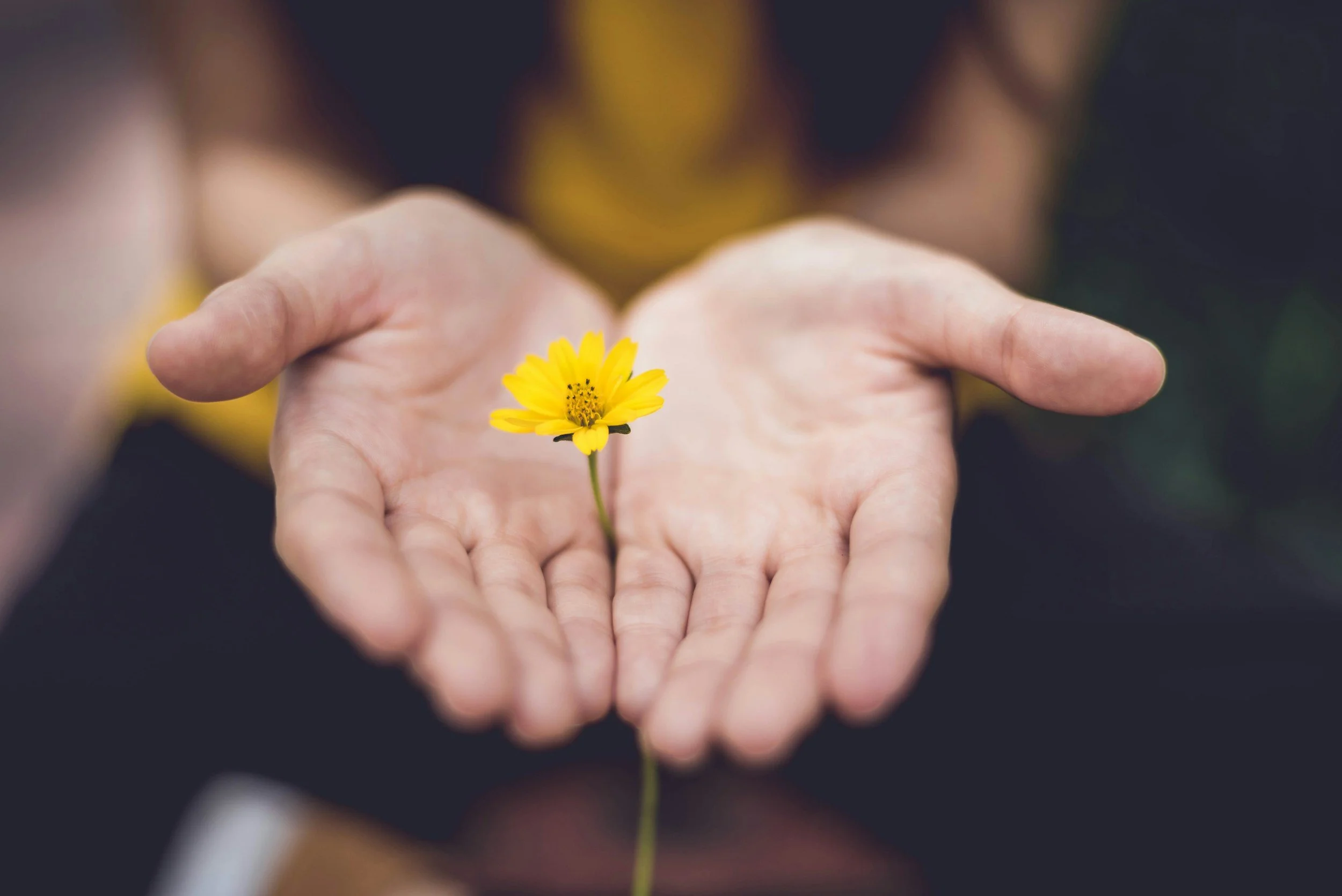
Not a self that seeks to transcend its humanity, but an integrated, transparent self—one that recognises itself as an expression of the ground of being while bringing that realisation into wholehearted participation in the world.
This integration unfolds across many dimensions—physical, emotional, cognitive, relational, cultural and systemic. Yet it begins, and is perhaps most challenging, in the interior: in the quality of awareness we bring to our own experience.
Dan Siegel's Wheel of Awareness offers a particularly elegant way of understanding what this integration can feel like from the inside.
Imagine a wheel where the hub represents open, spacious, receptive presence—pure awareness itself.
From this hub, the spokes of attention can move intentionally towards the changing experiences that arise around the rim.
The rim is partitioned into our primary domains of relative experience: our first five senses, our internal bodily sensations (interoception), our mental activities like thoughts and memories, and finally, our relational connection to life.
Siegel also describes what he calls the plateau—the enduring landscape through which experience is interpreted. It includes our habitual ways of making meaning, our developmental stage, cultural worldviews and the patterns of our nervous system, all of which influence whether life is generally experienced through a background sense of ease or threat.
An integrated self can move fluidly between the hub and the rim. Rooted in the open awareness of the hub, it can meet whatever arises on the rim—sensations, emotions, thoughts, memories or the events of everyday life—without becoming completely identified with them.
From this grounded centre, the plateau becomes visible. Our worldviews and psychological lenses can be recognised not as absolute reality, but as a living structure shaped by experience, culture, and time.
Shadow, unresolved experience and inherited ways of seeing gradually become available to awareness, creating the possibility of working with them consciously rather than remaining unconsciously organised by them.
Here, the absolute self and the relative, evolving self are no longer opposites. The wave does not disappear into the ocean; it recognises itself as the ocean expressing itself as a wave. The ground of being and the ground of becoming are understood as a single living process.
A self resting in this recognition becomes increasingly available to life because it is no longer organised primarily around protecting its own identity. It can feel deeply without being overwhelmed.
It can act with clarity without clinging to outcomes. It can disagree, hold boundaries, and enter difficulty—without contracting into defensiveness or hardening into rigidity. And from that ground, it can meet the world not as a threat to be managed, but as a living reality to be engaged with openness, discernment, and deep commitment.

Towards a consciousness that cares for all life
The arc we have been tracing—from egocentric survival to world-centric perspectives, and ultimately to Kosmocentric care—is the story of humanity itself. Slowly, unevenly and often through immense struggle, humanity has continued to expand its capacity for wisdom, care and responsibility. The question before us is whether that development can continue quickly enough to meet the challenges of our own time.
This is not only the story of growing up. It is equally the story of waking up, cleaning up, opening up, and showing up. These dimensions are not a hierarchy—they are an integration. Together, they describe what it looks like when a human life becomes genuinely whole and attuned to the planet it calls home.
I find myself sitting with this when I look at the current state of the world—at the horror of genocide, at a biosphere choking with pollution and destruction, at chronic hunger, and the systemic cruelty toward human and non-human life alike.
These are not random failures.
They are the consequence of a collective consciousness that has not yet matured into the responsibility its own power demands—one still shaped by egocentric and ethnocentric structures, with unexamined shadow and unresolved trauma expressed through individuals, institutions and nations alike.
I am not convinced that cruelty is the deepest truth of human nature; rather, I think it is what human nature looks like when the integration of the violence and traumas of the past—individual, collective, and intergenerational—fails to take place, and the conditions for personal growth are systematically denied.
Cleaning up the shadow while continuing to grow into broader and more inclusive ways of seeing is not optional work. It is the difference between a mind that genuinely serves life and one that exploits it.

And yet—and this moves me just as deeply—I am also witnessing something extraordinary. I see it in the countless expressions of care, courage, and responsibility emerging across the globe.
I see it in the people pulling species back from the edge of extinction—those protecting wildlife in every corner of the Earth, developing technologies to remove plastic from our oceans and rivers, caring for wounded, orphaned, and vulnerable animals and humans alike, collaborating across cultures and disciplines, and expressing their love for life in countless ways.
I see it in those working to regenerate entire ecosystems, alleviate poverty, improve the harshest living conditions, and speak up for those whose voices go unheard.
I see it in those standing against genocide and oppression, risking their own lives in defence of others.
And I see it just as clearly in the quieter expressions of everyday life—in those who choose, in whatever way they can, to bring a little more awareness, compassion, integrity and care into the relationships and communities around them.
This is not naïve optimism; it is evidence of human consciousness genuinely evolving. What remains in question is whether our collective consciousness can grow quickly enough to meet the meta-crisis we’ve created before the damage becomes irreversible.
That urgency makes every step toward inner development, and every courageous showing up, matter enormously.
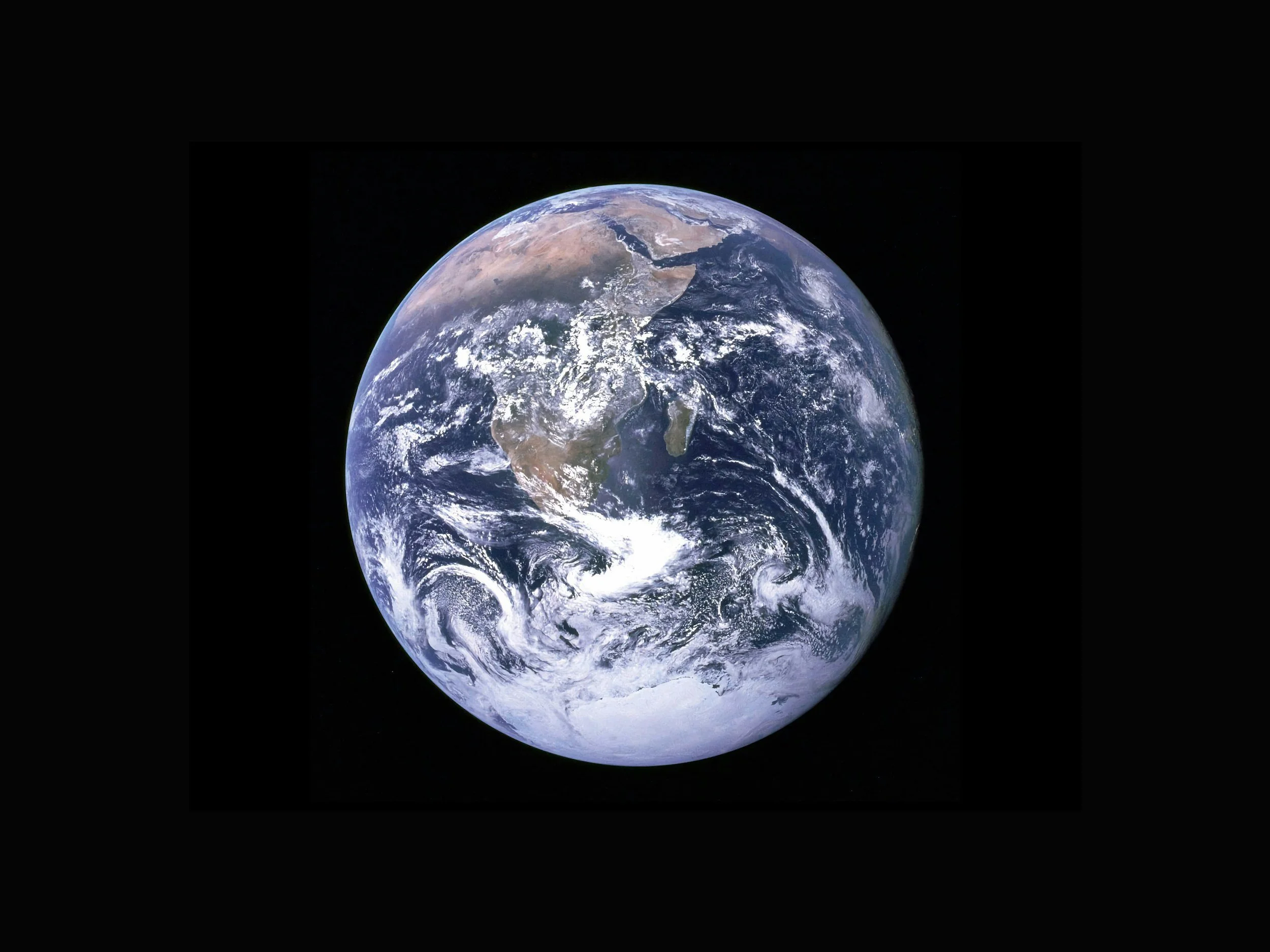
Growing up, waking up, cleaning up and opening up ultimately find their expression in how we show up—in the relationships we cultivate, the conversations we have, the communities we shape and the systems we help create.
The five dimensions of wholeness do not offer a blueprint for saving the world. Instead, they offer a more complete understanding of the human beings who are creating and walking the territory.
By recognising how these dimensions already co-arise within us—and within the cultures, institutions, and systems we inhabit—we become better equipped to work with complexity, respond wisely to our global crisis, and participate in the emergence of a healthier world.
We begin to see beyond the need to assign blame and into the deeper work of collective self-responsibility.
The historical shifts we look back on—the abolition of slavery, the slow expansion of the circle of moral concern, the emergence of ecological awareness—none of these just happened.
Each became possible because sufficient numbers of people began to see beyond and radically change the worldviews and conditions that had previously normalised the harm.
We are standing at a similar evolutionary threshold today, but with far higher stakes.
The frontier we must now cross demands that we widen our circle of care even further. It calls us towards a world where warfare, genocide, and environmental harm have become as unthinkable as institutionalised slavery.
A world where the suffering of a child, a whale, or an entire forest registers not as a distant problem, but as a direct call on our shared responsibility.
The path is long. And it begins, as it always has, with a single genuine turning inward—not as a refuge from reality, but as the ground from which we rise with the honesty, courage, and compassion required to meet the world that needs us.
Where might you begin?
With warmth,
Priyadhara