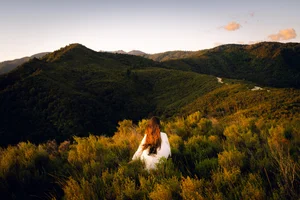
Nature is a continuum—and so are we.
Before wellbeing became a concept, before psychology and spirituality had names, humans lived in direct relationship with the natural world. Not as observers, but as participants. Our nervous systems, senses, and ways of making meaning evolved through land, weather, risk, rhythm, loss, beauty, and rest.
Modern life has shifted that relationship. Many of us now live indoors, mediated by screens, deadlines, and constant stimulation. When we feel scattered, depleted, or disconnected, it is not always because something is wrong. Often, it is because we have drifted too far from the living systems that once shaped our sense of wholeness.
Nature does not fix us.
It reconnects us—and invites us to evolve.
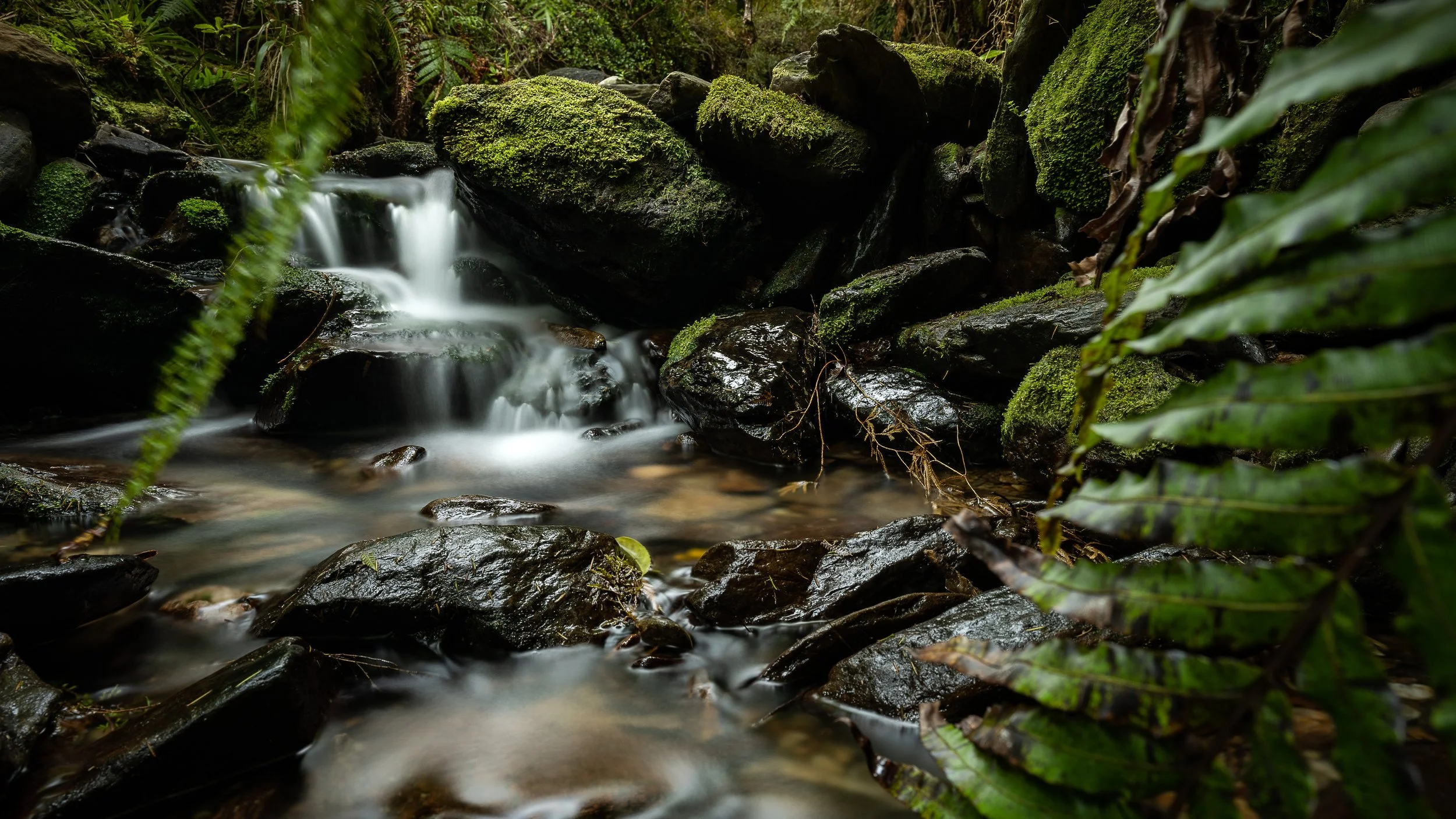
I travelled with my parents from the age of one, living in many countries and cultures, but one of my most adventurous and formative immersions in nature—the kind that leaves a lasting imprint—began around the age of eleven, when we lived in French Guiana.
It was wild.
We used to kayak along still, dark rivers, alert to snakes and unseen movement at the water’s edge. We mountain-biked through dense jungle, covered in mud, mosquitoes pushing us to the limits of what felt tolerable. We swam in waters where sharks were simply part of the ecosystem, not a story designed to frighten.
There was risk, yes.
But there was also vitality, confidence, and a deep bodily trust in life.
Nature was not scenery.
It was an initiation into life itself.
A few years later, at fifteen, I walked the Inca Trail with my mum. One night, high in the Andes, we camped beneath ancient ruins. I looked up and saw the Milky Way stretching across the sky in a way I had never imagined possible. At that altitude, the stars felt so close it was as if I could reach out and touch them.
That moment lives in me still—vivid, present, undimmed by time. It filled me with awe, with a quiet reverence for life itself. I didn’t have language for it then, but something in me knew:
This is real.
This will shape the rest of my life.
On the other side of the world, Atma’s relationship with nature began much earlier and closer to home. He grew up on his family’s farm, surrounded by open paddocks, cattle, sheep, and a steady presence of animals that required daily care and attention. Nature was not something to visit—it was something to live with and respond to.
As a young man, he read every mountaineering book and adventure guide he could get his hands on, then took that knowledge into the mountains—digging igloo shelters, spending nights under the stars, learning how to survive in the wild. He loved the freedom of the outdoors, and the way it pushed him to his physical and mental edge.
That same passion carried him overseas, where he trained in search and rescue and guided white-water rafting tours in Austria. During those early years, he saved several lives—at times risking his own—when rivers turned fierce and conditions changed without warning.
He developed no fear of nature.
Only a deep respect.
When he returned to Aotearoa New Zealand, Atma shared this knowledge with young people—supporting them to build confidence, resilience, and trust in themselves through learning how to be present, capable, and responsive in the outdoors. Nature became both classroom and mirror.
Later adventures—months in the Amazon, followed by extended time in the altiplano of Bolivia and Peru—deepened this relationship with nature in a very different way for me. The Amazon, in particular, is not a comfortable place for humans. It is vast, inhospitable, and unpredictable. You never quite know what is around the corner. That environment demanded heightened awareness—of sound, movement, intuition, and timing.
Presence was not optional.
Nature there was not romantic.
It was direct, uncompromising, and profoundly alive.
Across different landscapes and life stages, nature stirred similar questions in both Atma and I—long before we could articulate them clearly. What is this reality about? What is actually real beneath our stories? What are we here for? How does one live in alignment with something so vast, impermanent, and alive?
Those questions became the ground of our shared enquiry. They guided us towards yoga—not as a belief system or identity, but as a way of making sense of direct experience. Yoga offered a structure through which attention, body, breath, mind, shadow, spirit, lifestyle, and values could be integrated. It gave form to that which had already been seeded by nature.
Over time, the questions themselves softened.
Not because they were answered in any final or conceptual way, but because it became clear that the answer is not somewhere else. It unfolds through lived experience—through relationship, practice, surrender, humility, and discipline.
We come to see that life is simply what it is.
Nature shows this relentlessly—through cycles, impermanence, creation, and decay. Beauty and tragedy arrive side by side. Moments we wish would last forever quietly give way to what comes next, creating the conditions for something new.
Impermanence is not a flaw in the design; it is the very condition through which inclusion and transcendence become possible, giving rise to life.
We often resist this. We want certainty, control, things our way. In doing so, we fragment ourselves and one another. Nature does not. It holds predator and prey, growth and decay, danger and protection within a wider, evolving wholeness that becomes vaster and vaster, reshaping itself—Big Bang after Big Bang.
What Homo sapiens may have experienced intuitively throughout its existence is now echoed by research. Time spent in natural environments is consistently associated with reduced stress, improved mood, better sleep, and clearer thinking. Exposure to nature has been linked with lower cortisol levels, improved emotional regulation, and positive effects on immune and cardiovascular health.
Psychological research also suggests that natural settings restore our capacity for attention through soft fascination—the effortless way our senses engage with movement, sound, and light.
But beyond mechanisms and metrics, something more fundamental is happening.
Nature restores a sense of belonging.
The relationship is reciprocal. People who feel connected to nature are more likely to care for it—supporting biodiversity, reducing waste, acting with stewardship rather than extraction.
Healthier ecosystems support healthier minds. Healthier minds are more capable of responsibility and care.
Nature is not just the green space we escape to on weekends. It is the living web of processes, species, and forces—from microorganisms in the soil to the dynamics shaping evolution itself.
Nothing exists outside it.
Evolution is not something happening to us. It is life unfolding as us—through finite forms, in an unfinished universe.
Nature is a continuum. And so are we.
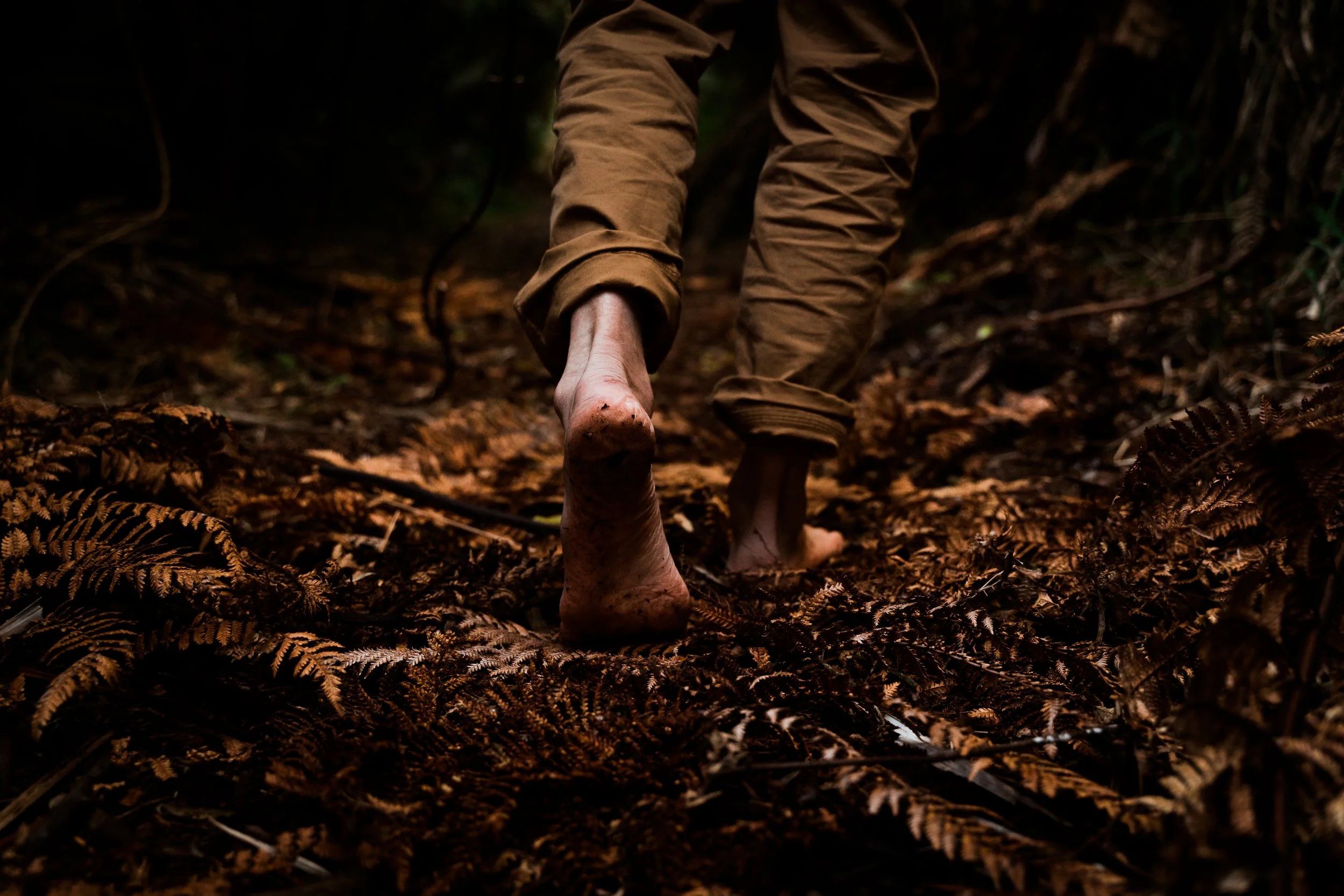
When was the last time you stepped barefoot onto the earth?
When did you last walk through a forest slowly enough to feel each leaf and twig beneath your feet—the ground speaking directly to your nervous system, your breath, your intuition?
Nature does not ask us to return to who we once were.
It invites us to remember what we already are—and to participate consciously in what we are becoming.
—Priyadhara